
💡 Quick Answer
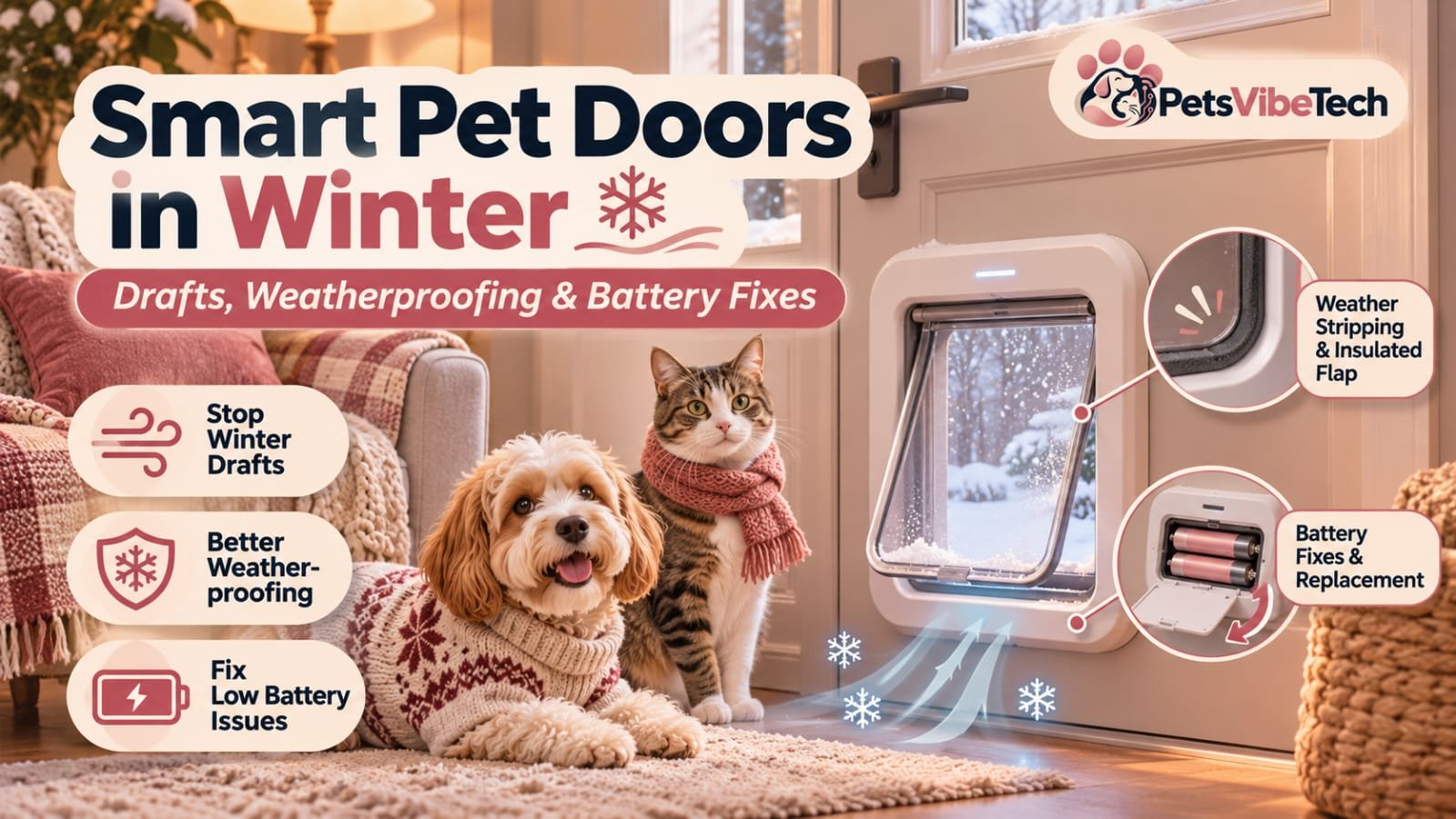
Smart pet doors in winter can develop drafts, sticking flaps, unreliable locks, and battery problems. Start by cleaning the flap edges, checking the magnetic closure, inspecting weather seals, and replacing weak batteries with the type recommended by the manufacturer. Before leaving your pet alone, test entry and exit and confirm what happens if the door loses power.
A pet door that works perfectly in October can become surprisingly troublesome by January.
Perhaps you’ve noticed a cold breeze near the floor. Your cat flap doesn’t close quite as neatly as it used to, or the electronic lock clicks several times before releasing.
The tempting solution is to buy extra weatherstripping or replace the batteries and hope for the best.
Sometimes that’s enough. Other times, adding a thicker seal actually makes the flap harder to move.
The trick is to work out whether you’re dealing with an air leak, a mechanical problem, or an electronic fault. Each needs a different fix.
What Goes Wrong With Pet Doors in Cold Weather?
Winter doesn’t create every pet-door problem, but it often makes existing weaknesses more obvious.
A slightly misaligned flap may leak more noticeable cold air. Dirt around a magnetic closure can prevent a proper seal. Some flexible flaps also change shape slightly with temperature.
Electronic doors add another layer: batteries, sensors, locks, and sometimes Wi-Fi connectivity.
Here’s where to start.
| What You Notice | Possible Cause | First Thing to Check |
|---|---|---|
| Cold air around the flap | Worn seal or poor flap alignment | Flap edges and magnetic closure |
| Draft around the frame | Gap between frame and installation opening | Perimeter seal |
| Flap stays partly open | Dirt, warping, or obstruction | Hinge, threshold, and flap |
| Door clicks but won’t unlock | Weak batteries or obstructed mechanism | Battery condition and sensors |
| Door doesn’t recognize your cat | Dirty reader, low power, or identification issue | Sensor area and registered pet |
| Smart controls stop responding | Power or connectivity problem | Local operation and app status |
| Water appears near the opening | Damaged seal or installation gap | Exterior weatherproofing |
One clue matters more than people realize: where the draft is coming from.
Cold air moving through the flap needs a different repair from air entering around the outside of the frame.
How to Find and Fix Drafts Around a Pet Door
1. Check Whether the Flap Closes Completely
Start indoors while the weather is calm enough to examine the door safely.
Gently push the flap open and let it return to its resting position.
Does it swing freely? Does the bottom edge meet the magnetic strip? Is one corner sitting farther from the frame than the other?
You can use a lightweight piece of tissue near the closed door to help identify airflow. Avoid candles or open flames.
If the flap doesn’t sit properly, look for hair, grit, or a damaged magnetic strip.
PetSafe’s support instructions specifically recommend inspecting the flap for tears, warping, and magnetic-strip damage when it won’t stay closed.
If the flap is badly warped, replacement is usually more sensible than forcing it into position.
Don’t add heavy magnets or homemade catches. They can make the flap difficult for a small or elderly pet to push open.
2. Inspect the Weather Seals
Some electronic cat flaps use brush-style draught excluders around the opening.
These help reduce airflow, but they also collect fur and dirt.
Sure Petcare notes that accumulated hair around the draught excluders can obstruct sensors and interfere with reliable operation.
Clean accessible seals gently using the method recommended for your model.
If a strip has detached, check whether the manufacturer sells a replacement.
Avoid attaching thick household weatherstripping directly to a moving flap unless the manufacturer approves it.
Even a few extra millimeters can stop the door from closing or unlocking correctly.
3. Check for Gaps Around the Installed Frame
Suppose the flap is closing properly, but you still feel cold air around the surrounding panel.
The installation may be the problem.
Look for visible gaps between the pet-door frame and the wall, door, or mounting adapter.
Some installations require weatherproof sealant around the exterior frame.
However, sealant placement varies by product. On certain PetSafe models, sealing the wrong area can interfere with the closing panel.
Follow your specific installation instructions rather than applying caulk everywhere.
If the pet door is mounted in glass, a wall tunnel, or a sliding-door panel, use the approved mounting and sealing components.
A practical rule: Seal the stationary installation gaps without interfering with the flap, sensors, drainage, or locking mechanism.
Why Does a Smart Pet Door Stop Unlocking in Winter?
A smart door has two jobs.
The physical flap must move properly, and the electronics must recognize your pet and release the lock.
If either fails, your cat or dog may be unable to enter.
Start With the Batteries
Battery problems are among the easiest issues to investigate.
For example, the SureFlap Microchip Cat Flap uses four AA alkaline batteries, while the PetSafe SmartDoor Connected uses four C-cell batteries for its medium version or four D-cell batteries for the large version.
Those specifications are not interchangeable.
Check your exact model before buying replacements.
If the low-battery warning appears, don’t assume the door will keep operating for another week.
Replace the entire set with fresh batteries of the recommended type and correct polarity.
PetSafe specifically advises against lithium and rechargeable batteries for its SmartDoor Connected models.
Cold conditions can also reduce the available performance of some battery chemistries, particularly when batteries are already nearing depletion.
That doesn’t mean a battery-powered pet door will automatically fail in freezing weather. It means an early battery check is worth doing.
Clean the Identification Sensors
Microchip doors can become unreliable when dirt builds up in the tunnel.
On supported SureFlap products, optical sensors help determine when a pet is approaching or entering.
Hair, mud, and grime can interfere with detection.
Clean the accessible sensor surfaces using a soft, slightly damp cloth, following the manufacturer’s instructions.
Pay attention to the tunnel floor and draught excluders.
Don’t spray household cleaners directly into the electronics.
After cleaning, allow the door to settle and test it with your pet’s registered identification.
Check for a Mechanical Obstruction
If the lock makes a sound but won’t release, the flap may be crooked or something may be blocking the mechanism.
Inspect for:
- Packed dirt around the threshold
- Ice or moisture affecting moving parts
- Warped or cracked flap material
- Damaged weatherstripping
- A misaligned frame
Do not force the electronic lock open with a screwdriver.
Likewise, avoid blasting frozen components with a hot hairdryer or pouring boiling water over them.
Sudden heat and moisture can damage plastic parts, seals, or electronics.
If a component is frozen or damaged, follow the manufacturer’s procedure or contact support rather than improvising a repair.
For a broader explanation of identification and locking systems, see our Microchip Cat Flap vs Smart Pet Door comparison.
What Happens if a Smart Pet Door Loses Power?
This deserves attention before winter storms arrive.
Not every electronic pet door behaves the same way when batteries run out or electricity fails.
Some use batteries as their primary power source. Others support external power adapters, with batteries serving as backup.
A few connected models also let owners choose how the lock should behave during power loss.
For example, the PetSafe SmartDoor Connected provides a setting for locked or unlocked power-loss behavior.
There is an important trade-off: when that model is unlocked without power, its electronic pet-identification system cannot function, meaning other animals may also gain access.
That makes the choice more complicated than simply selecting whichever setting sounds convenient.
Think about your pet’s routine.
If your cat regularly goes outside, could a locked door leave it stranded?
If you select an unlocked fallback, could unfamiliar animals enter?
There’s no universal answer. The right configuration depends on your home, the device, and your pet’s safety.
Our Power Outages and Pet Tech guide covers backup-power considerations for household pet devices.
Before a storm: Check the manufacturer’s documented power-loss behavior and arrange a safe alternative entrance or an in-person response if needed.
Should You Add Extra Weatherproofing?
Possibly—but only after finding the source of the leak.
A loose exterior seal can often be corrected without changing the pet door.
A worn flap may need replacement.
An uninsulated single-flap design, however, may simply provide less protection against cold weather than you’d like.
When an Insulated Pet Door Makes Sense
Insulated models sometimes use multiple flaps, magnetic closures, and additional sealing layers.
PetSafe’s Extreme Weather range, for example, includes designs with three flaps and an insulating center layer.
These features can reduce unwanted airflow compared with basic single-flap designs.
But there’s a catch: an insulated pet door is not necessarily a smart pet door.
Many insulated models provide weather protection without microchip recognition or remote locking.
Before replacing an electronic door, make sure the new product preserves any access controls you rely on.
Our Best Microchip Cat Doors guide can help you understand the identification options available.
What About Draft Covers?
A compatible closing panel can be useful when the pet door won’t be used for a while.
However, a panel that physically blocks access must not be installed while your pet still needs to enter or exit through that opening.
If you close the door overnight, confirm every pet is indoors first.
This is especially important for cats accustomed to coming home independently.
A Ten-Minute Winter Maintenance Routine
You don’t need to dismantle your pet door every weekend.
A short inspection during colder months can catch most obvious problems.
- Open and release the flap several times to check movement.
- Remove dirt and hair from the threshold and accessible seals.
- Inspect the magnets, flap edges, and weatherstripping.
- Look for moisture or gaps around the installation.
- Check the battery indicator and app warnings.
- Confirm that the intended lock mode is active.
- Test entry and exit with your pet under supervision.
If the door connects to an app, review its notifications and any available battery status.
Also check its operating temperature range. Some electronic products have environmental limits that matter when installed in exposed locations.
Our Pet Tech Operating Temperature guide explains why device placement matters.
Finally, remember that pets need time to adjust when a flap feels different.
Replacing a flexible flap or changing its closure tension may make a previously familiar doorway seem strange.
Don’t assume your pet will immediately use the modified door.
When Should You Replace the Door Instead of Repairing It?
A replacement may be justified if the frame is cracked, water has entered the electronics, the lock repeatedly fails despite proper maintenance, or compatible spare parts are unavailable.
Consider a better-insulated model if your existing door is fundamentally unsuitable for a cold, exposed location.
But don’t replace a functioning smart door simply because you notice a little airflow.
First check whether the flap is aligned and whether the installation is properly sealed.
Those are less expensive problems to investigate.
If electronics are damaged or the locking mechanism is unreliable, contact the manufacturer rather than bypassing a safety-related component.
Winter-ready doors and spare parts
- PetSafe Extreme Weather pet door — multi-flap insulated design for cold, exposed doors. Amazon
- SureFlap Microchip Cat Flap — keeps selective entry if you replace an electronic flap. Amazon
- PetSafe SmartDoor Connected — app-controlled door with configurable power-loss behavior. Amazon
- Alkaline AA, C or D batteries — check your manual; some doors advise against lithium or rechargeables. Amazon
Affiliate links: we may earn a commission at no extra cost to you. Prices change, so check the listing before you buy.
Frequently Asked Questions
Why is cold air coming through my microchip cat flap?
The flap may be misaligned, a magnetic closure may not be seating properly, or the draught excluder may be worn or dirty. Air can also enter around the installation frame. Inspect those areas separately before adding seals.
Do smart pet door batteries drain faster in winter?
They can deliver less usable performance in cold conditions, depending on battery chemistry, temperature, and battery age. Excessive sensor activity caused by dirt or obstruction can also increase power consumption. Check the manufacturer’s recommended battery type.
Can I put weatherstripping around an electronic pet door?
You may be able to seal stationary gaps using manufacturer-approved materials. Avoid adding unapproved strips to the moving flap, identification sensors, or locking components, where they could interfere with operation.
What happens if a microchip pet door loses power?
Behavior depends on the model. Some doors may remain mechanically locked or unlocked, while others support configurable power-loss settings. Consult the exact manual and test the supported behavior before relying on the door during an outage.
Should I lock the cat flap overnight during winter?
That depends on your cat’s routine and access to a safe indoor space. If you plan to lock the flap, ensure your cat is indoors first. An in-only mode may be useful on supported models when you want a cat to return but not leave again.
Is a double-flap or triple-flap pet door better for cold weather?
An appropriately fitted multi-flap insulated door can reduce drafts compared with a basic single-flap design. However, it may not provide electronic access control. Compare insulation, fit, replacement parts, and identification features before choosing.
Final Verdict
Smart pet doors don’t need complicated winter upgrades to work reliably.
Most problems are worth investigating in a simple order: check the flap, clean the seals and sensors, inspect the installation, and verify the batteries and lock settings.
If cold air enters around the frame, improve the installation using the approved sealing method.
If the flap is damaged, replace it with the correct part.
And if the electronic lock is unreliable, treat that as an access and safety issue—not merely an inconvenience.
The most important winter preparation is making sure your pet can enter a safe, comfortable home when it needs to.
A well-maintained pet door should protect access without letting the weather become another unwanted visitor.



Share your experience