

💡 Quick Answer
Holiday travel without your pet requires more than filling an automatic feeder and installing a camera. For a 1–2 week absence, arrange reliable human care first, then use pet technology to support feeding, monitoring, and temperature control. Test every device before departure, provide backup food and water, and leave clear emergency instructions.
Check prices on Amazon: PETLIBRO Granary feeder (battery backup) · Wi-Fi temperature sensor
Related guide: Automatic Cat Feeder Battery Backup
The suitcase is packed. Your flight leaves tomorrow. You’ve checked the automatic feeder, filled the water fountain, and opened the pet camera one last time.
Everything looks ready.
But what happens if the feeder jams on day four? Or the router goes offline while you’re in another country?
That’s where a good vacation plan makes all the difference.
Smart pet devices can make travel considerably easier, but they work best when someone nearby can intervene if something goes wrong.
The aim isn’t to create a home that runs without people for two weeks. It’s to make your pet’s care predictable, comfortable, and resilient when you’re not there.
Can You Leave a Cat or Dog at Home for Two Weeks?
Not without appropriate human care.
For cats, staying in their familiar home can be less stressful than moving to an unfamiliar environment. However, they still need regular visits, fresh water, litter cleaning, attention, and someone who can recognize illness.
Cats Protection recommends arranging a sitter who visits at least twice daily. Kittens, senior cats, and animals with medical conditions may need more frequent care.
Dogs generally require much more hands-on attention throughout the day, including toilet breaks, exercise, feeding, and companionship.
For a week or two, a live-in sitter, suitable boarding arrangement, or another appropriate supervised care plan is often preferable to brief visits.
| Pet’s Situation | Care Arrangement to Consider |
|---|---|
| Healthy adult indoor cat | Reliable sitter visiting at least twice daily |
| Senior cat or cat requiring medication | More frequent or specialized care |
| Dog accustomed to regular human company | Live-in sitter or suitable boarding |
| Puppy or kitten | Frequent, age-appropriate supervision |
| Pet recovering from illness | Veterinarian-approved care arrangement |
If suitable human care isn’t available, consider changing the travel arrangements rather than relying on technology alone.
Your Six-Part Pet Tech Plan for 1–2 Weeks
1. Automatic Feeder: Keep Meals Consistent
An automatic feeder is useful for maintaining familiar mealtimes.
But don’t assume that loading enough kibble for fourteen days means feeding is taken care of.
Before leaving, check whether the feeder consistently dispenses the expected portions.
Run multiple test cycles using your cat’s usual food. Pay attention to unusual noises, partial servings, and food getting stuck.
If your feeder depends on Wi-Fi, check whether scheduled meals continue during an internet outage.
Also verify battery-backup behavior.
Some feeders continue dispensing on batteries while their app and camera functions stop working.
Our Automatic Cat Feeder Battery Backup guide explains what to check.
What the sitter should do: Confirm food has actually reached the bowl, inspect the hopper, and observe whether your pet is eating normally.
A successful app notification doesn’t prove your cat ate its meal.
For wet-food diets, arrange fresh preparation and appropriate refrigeration. An ordinary dry-food feeder isn’t a safe substitute.
2. Water Fountain: Add a Second Water Source
A filtered water fountain can encourage drinking, but pumps fail.
They can become clogged, lose power, or stop working when water levels drop.
Before traveling, clean the pump, replace filters when due, and check the water level and flow.
Then place an additional clean water bowl in a separate, accessible location.
That simple backup may be more useful than another expensive gadget.
Ask your sitter to replace drinking water and clean bowls as appropriate.
Don’t rely solely on a fountain’s advertised tank capacity for the entire trip.
3. Pet Camera: Monitor Without Constantly Watching
A camera gives you a window into your pet’s routine while you’re away.
It can help you check whether your cat is resting in its usual place or whether a feeder has dispensed food.
Choose a camera position that covers a useful area without intruding unnecessarily on your sitter’s privacy.
Explain to your sitter that the camera is operating and agree on what it records.
Enable relevant motion alerts, but avoid turning on every possible notification. Too many unnecessary alerts can make it easier to miss something important.
Test remote viewing using mobile data before departure.
If the camera won’t connect, our Pet Camera Wi-Fi Troubleshooting Guide covers common problems.
Remember that a camera can’t diagnose illness. A pet that looks quiet on video may still need urgent attention.
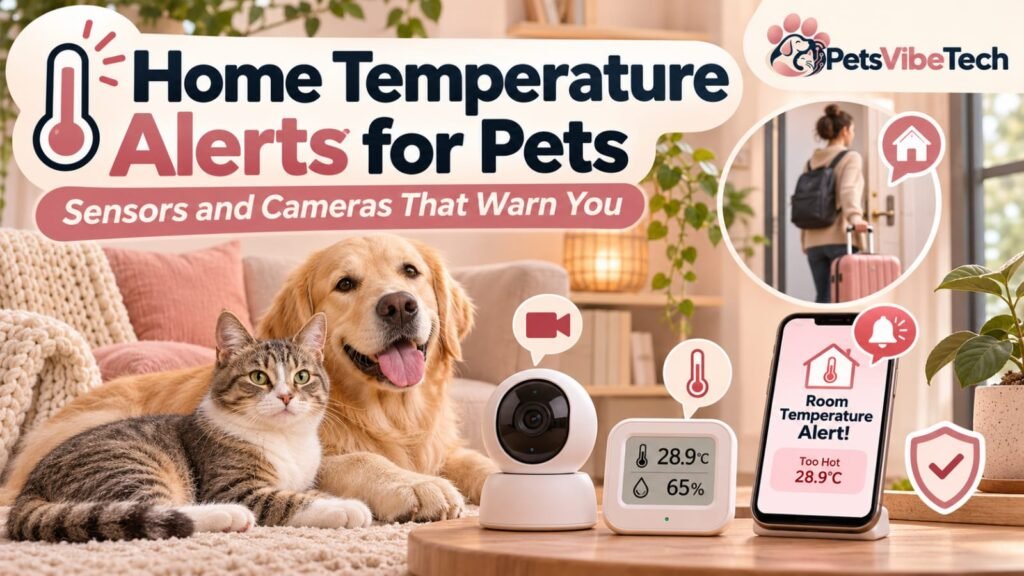
4. Temperature Monitoring: Watch the Room, Not Just the Pet
An indoor camera usually can’t tell you whether the room is becoming dangerously hot or cold.
A dedicated temperature sensor or compatible smart thermostat can provide that information.
Set alerts according to your pet’s needs and test them before leaving.
Place sensors away from direct sunlight, heating equipment, and air-conditioning vents.
Make sure your sitter knows what to do if the indoor climate becomes unsuitable.
If your pet has medical conditions that make temperature particularly important, discuss appropriate conditions with your veterinarian.
5. Litter Box: Automation Doesn’t Replace Cleaning
A self-cleaning litter box can reduce daily maintenance, but it still needs supervision.
Waste drawers fill up. Sensors become dirty. Mechanical parts occasionally stop working.
Before traveling, clean the device and verify that its safety systems and cleaning cycles work properly.
Ask your sitter to inspect it during every visit.
If your cat is comfortable using a conventional litter tray, providing an additional clean tray may offer useful redundancy.
Our Self-Cleaning Litter Box Troubleshooting Guide explains common causes of failed cleaning cycles.
Avoid introducing a completely new automatic litter box immediately before a long trip. Give your cat time to become comfortable with it while you’re still home.
6. Power and Internet: Prepare for Failure
Smart devices often share the same weaknesses: electricity and internet connectivity.
A power outage could interrupt your router, camera, water fountain, and certain feeder functions at once.
A correctly sized UPS may keep a router or other compatible low-power device operating temporarily.
It won’t necessarily maintain household heating, cooling, or wet-food refrigeration.
Our Power Outages and Pet Tech guide explains these limitations.
Before departure, make sure someone can enter your home even when electronic locks, Wi-Fi, or smart-home services are unavailable.
A physical backup key in trusted hands is often more dependable than relying entirely on an app.
What If Something Stops Working While You’re Away?
This is the part of the plan I’d spend the most time on.
You don’t need a backup gadget for every possible problem. You need someone who knows what to do.
| Problem | Immediate Backup Action |
|---|---|
| Automatic feeder stops | Sitter feeds your pet manually |
| Water fountain stops | Sitter provides fresh water in bowls |
| Camera goes offline | Sitter checks your pet in person |
| Temperature alert arrives | Sitter checks climate control and your pet |
| Litter box stops cycling | Sitter uses or cleans a conventional tray |
| Power outage lasts too long | Sitter follows the relocation or emergency care plan |
| Pet becomes sick | Sitter contacts the veterinarian and authorized decision-maker |
Make these decisions before you leave.
A pet sitter shouldn’t have to discover your preferred veterinary clinic while dealing with an emergency.
A Simple Preparation Timeline
Seven Days Before Departure
Confirm your sitter or boarding arrangements.
Check that enough of your pet’s usual food, litter, and prescribed medication will be available throughout the trip, with a reasonable extra supply in case your return is delayed.
Test feeding schedules and other essential devices.
If you’re using new equipment, allow time to identify problems while you’re still home.
Three Days Before Departure
Clean the feeder, fountain, and litter equipment.
Test your camera away from your home Wi-Fi.
Review temperature alerts and battery levels.
Give your sitter a walkthrough of your home’s equipment, including manual controls and backup supplies.
The Day Before Departure
Write down feeding instructions, visit schedules, access information, and emergency contacts.
Confirm that your sitter can enter the home using the intended method.
Make sure a trusted backup person is available if the primary sitter becomes unavailable.
During the Trip
Agree on a predictable communication routine.
A short update after visits—confirming feeding, drinking, litter use, and general behavior—is more valuable than constantly checking the camera.
If an alert indicates a serious problem, contact the person responsible for your pet rather than assuming it will resolve itself.
The One-Page Pet Sitter Handover
Your sitter shouldn’t need to search through old messages for important information.
Leave a simple document containing:
- Your pet’s name, age, identification, and usual routine
- Food type, portions, feeding times, and dietary restrictions
- Medication instructions, if applicable
- Your veterinarian and emergency clinic contact details
- Your travel contact information and backup contact
- Equipment instructions and locations of spare supplies
- What to do when a device fails
- Emergency veterinary authorization and any relevant financial arrangements
The American Veterinary Medical Association recommends choosing a trusted person who can make emergency care decisions if you’re unreachable.
Discuss that responsibility in advance and check what authorization your veterinary practice requires.
Three Mistakes That Can Ruin an Otherwise Good Plan
Buying Too Much Equipment Right Before Traveling
A new device can introduce unfamiliar problems.
If your existing feeder works, don’t replace it solely because a holiday promotion looks attractive.
Reliability matters more than novelty when you’ll be away.
Assuming Remote Monitoring Means Complete Care
A camera can show a problem. It cannot refill a bowl, administer medication, clean up an accident, or transport a sick animal to the veterinarian.
Human care is the foundation of the plan.
Forgetting That Your Return Could Be Delayed
Flights get canceled, weather changes, and emergencies happen.
Don’t plan food supplies and sitter availability around an exact return hour.
Arrange a reasonable buffer and make sure the care plan can continue if you’re delayed.
Your travel pet tech kit
- Automatic feeder with battery backup — e.g. PETLIBRO Granary. Amazon
- WOPET feeders and water fountains — brand store. WOPET store
- Pet camera with local recording — e.g. Tapo C225. Amazon
- Wi-Fi temperature and humidity sensor — alerts if the room gets too hot or cold. Amazon
- Small UPS for the router — keeps the camera online through short outages. Amazon
Affiliate links: we may earn a commission at no extra cost to you. Prices change, so check the listing before you buy.
Frequently Asked Questions
Can I leave my cat home for two weeks with an automatic feeder and camera?
Not without reliable human care. A feeder and camera can support the routine, but cats still need regular visits, fresh water, litter cleaning, attention, and health checks. Cats Protection recommends at least twice-daily sitter visits.
How often should a pet sitter visit during a vacation?
Healthy adult cats should generally receive at least two visits daily, with additional care when needed. Dogs typically require substantially more frequent, hands-on attention. The appropriate arrangement depends on the pet’s needs.
What happens if the automatic feeder stops while I’m abroad?
Your sitter should have access to the usual food and instructions for manual feeding. Test the feeder before traveling and make sure someone can respond promptly to a suspected failure.
Is a pet camera necessary if I have a sitter?
No. A trustworthy sitter is more important. A camera can provide reassurance and help you monitor certain equipment, but it should complement rather than replace human care.
Should I buy a backup power supply for pet devices?
Possibly. A UPS can help some compatible low-power equipment operate during a short outage. Check the devices’ power requirements and understand that a UPS may not support heating, cooling, or other high-power appliances.
Is boarding safer than leaving a pet at home?
It depends on the animal and the quality of care available. Some pets are more comfortable in their familiar environment with a reliable sitter. Others may benefit from suitable boarding or supervised care, particularly when frequent assistance is needed.
Final Verdict
A good holiday pet care plan doesn’t require the most expensive smart-home setup.
For a healthy adult cat, a reliable sitter, a tested feeder, backup water, and a sensible monitoring arrangement may cover the main practical needs.
For dogs, puppies, senior animals, or pets needing medication, prioritize the level of hands-on care they require.
The most useful technology is often the equipment you already own, understand, and have tested.
Before leaving for one or two weeks, ask yourself one question:
If every smart device stopped working tomorrow, would my pet still receive safe, reliable care?
If the answer is yes because a capable person has the instructions, supplies, and access they need, you’ve built a much stronger travel plan.



Share your experience